If you are one of the few who took a chance on the recent No Reply Press book, A Private Matter, and made your way through to the end of the last essay, you’ll know that I am an advocate of taking your press books into dangerous situations: your sailboat, a wilderness encounter, to the beach. Why limit your reading experience to a trade edition when you could tote a printed version in your beach bag and enjoy the well-defined letters and luxurious textures of a printed book? Life is short.
Eveline is an interesting piece in Dubliners. If you come upon it in a full volume, it is pretty short, and given what Joyce had to say about the subjects of the stories, that he ‘chose Dublin for the scene because that city seemed to (him) the centre of paralysis,’ one might race through the story and see that Eveline was a mere example of a character who came to a crossroads and merely froze, while the opportunity for a better life disappeared without her. And what of Joyce’s idea of epiphany? Is Eveline’s epiphany just another dark example of characters realizing their own stagnation?
I say, ‘not so fast. . . .’ I would submit that Eveline has a more illumined psychological breakthrough that allows her a brighter passage into adulthood than might be apparent at first. And I see Joyce leaving us good clues throughout the story. Unlike a book where the design and illustration are merely reflections of images and subjects from the text, my aim is always something different—to facilitate a close read, to make resting one’s eyes on a page to root around for clarity comfortable and proactive. The single story printed in its own volume allows no distraction from the effort of reading critically. We can ask, ‘Is Frank really such a prize for whom to give up a known life? Is he trustworthy? The book employs some wonderful period printing blocks on loan from a fellow printer, Preston Lawing at Blackwatch Graphics, to keep us focused on the historical context of the story.
To say a woman was moving to Buenos Ayres had damning implications in early 20th century Irish culture, and the movie The Bohemian Girl, at which Eveline was so proud for sitting in ‘an unaccustomed part of the theatre,’ was a real movie with important mirroring to Joyce’s story. She claims at one point that Frank would ‘save’ her from a hard life in which she is abused by her father and disregarded by her work colleagues, but is he the answer to her prayer in the final moments of her leaving? The bell clangs. Is her expressionless face a moment of frozen paralysis, or a turning inward, of epiphany? I wanted to isolate the story and present it for a close read on its own so that we might ask the questions and possibly see that a constant strand of awakening happens for Eveline from the beginning of the narrative to the end. Can you see that too? What’s better than a single volume designed for rereading a single story!
You might find it suitable to read for these questions in a full copy of Dubliners, though it may feel a little heavy for the beach, or a backpack, and later in your armchair you may be annoyed by the sand trickling out of the deep creases of the gutter. The edition from The Last Press is covered in boards with a non-adhesive binding, so beach sand will easily sift through the signatures and back into the on-shore breeze, and the four sharp corners will be suitable as a defensive weapon should a mountain lion or bear give you trouble while you are in the backcountry. Two more good reasons to have your own discreet copy of Eveline!
Of the 60 copies of this book, 40 are offered here for sale, 10 are left unbound, and ten were consumed by test bindings and artist proofs. All available copies are bound by hand between boards covered by handmade mulberry paper, sewn onto handmade flax tabs pulled outside the boards. I have added bundle options to this listing for those who might find the binding interesting enough to explore past uses of it in Sutton Hoo Press books, namely A Brief History of Punctuation by Maurya Simon (the available stock for which is diminished to two test bindings) and Rhumb Lines, a wonderful first collection of poems by Anthony Deaton.
All titles are ready to ship immediately!

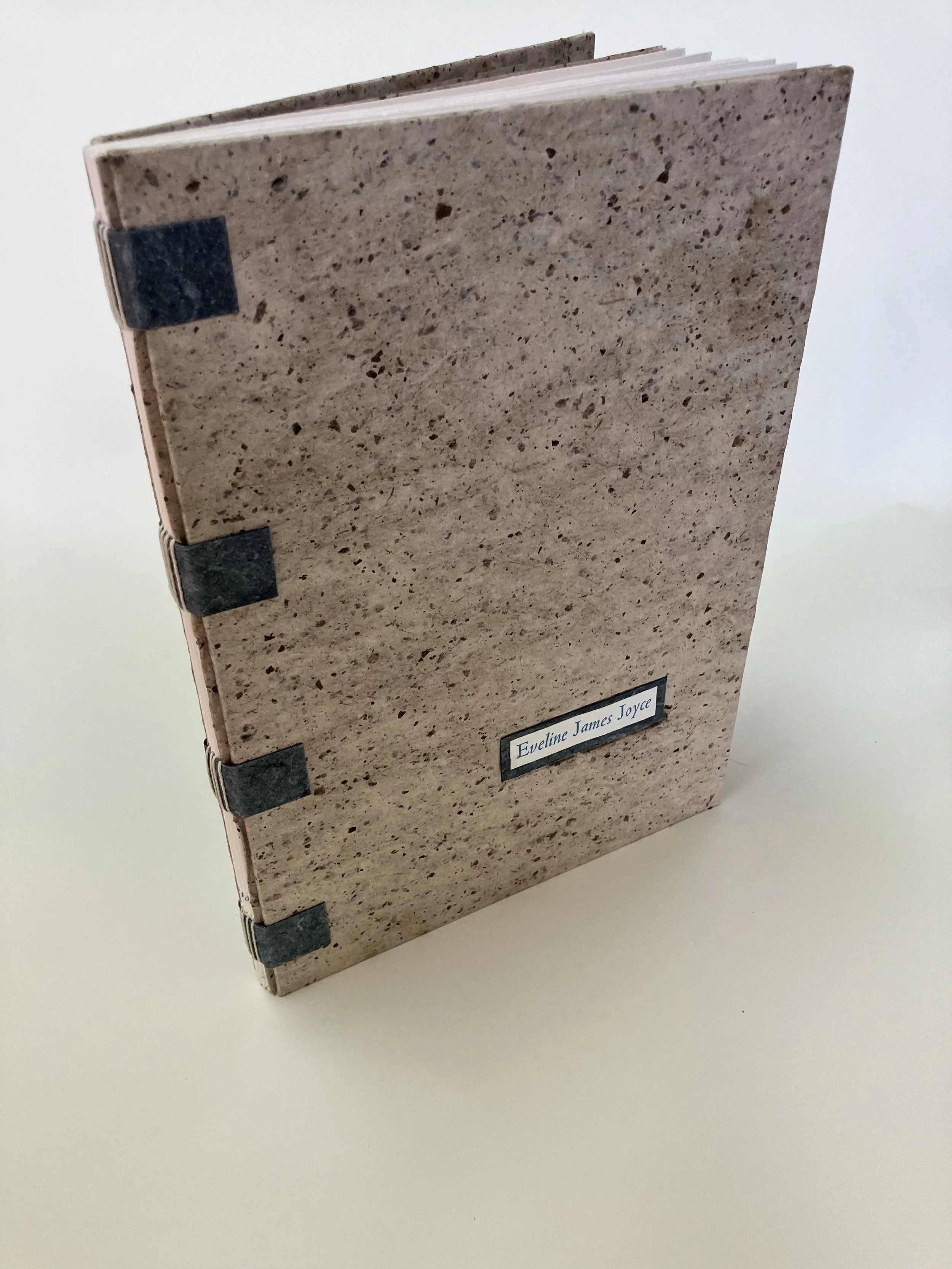 Image 1 of 8
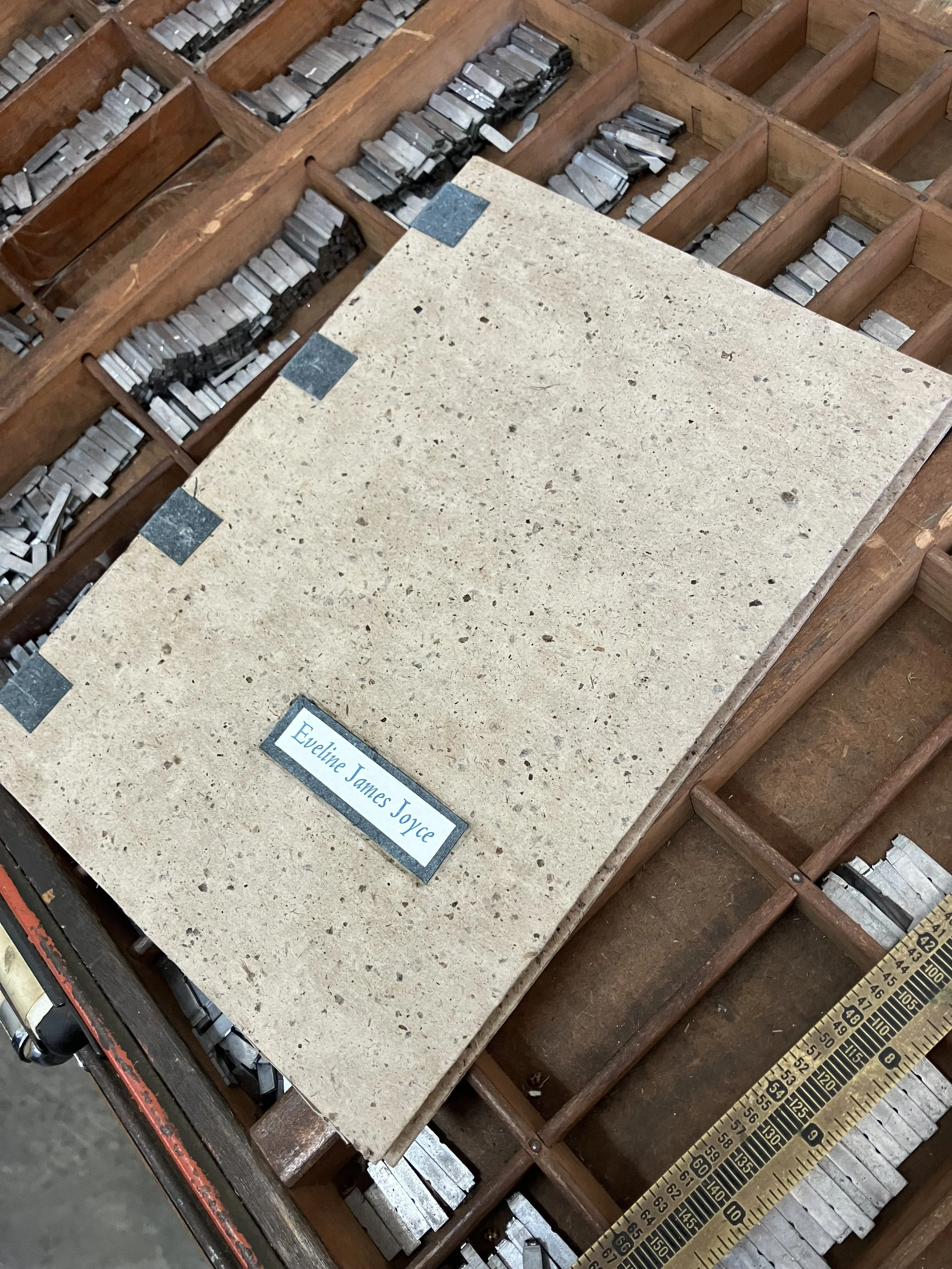 Image 2 of 8
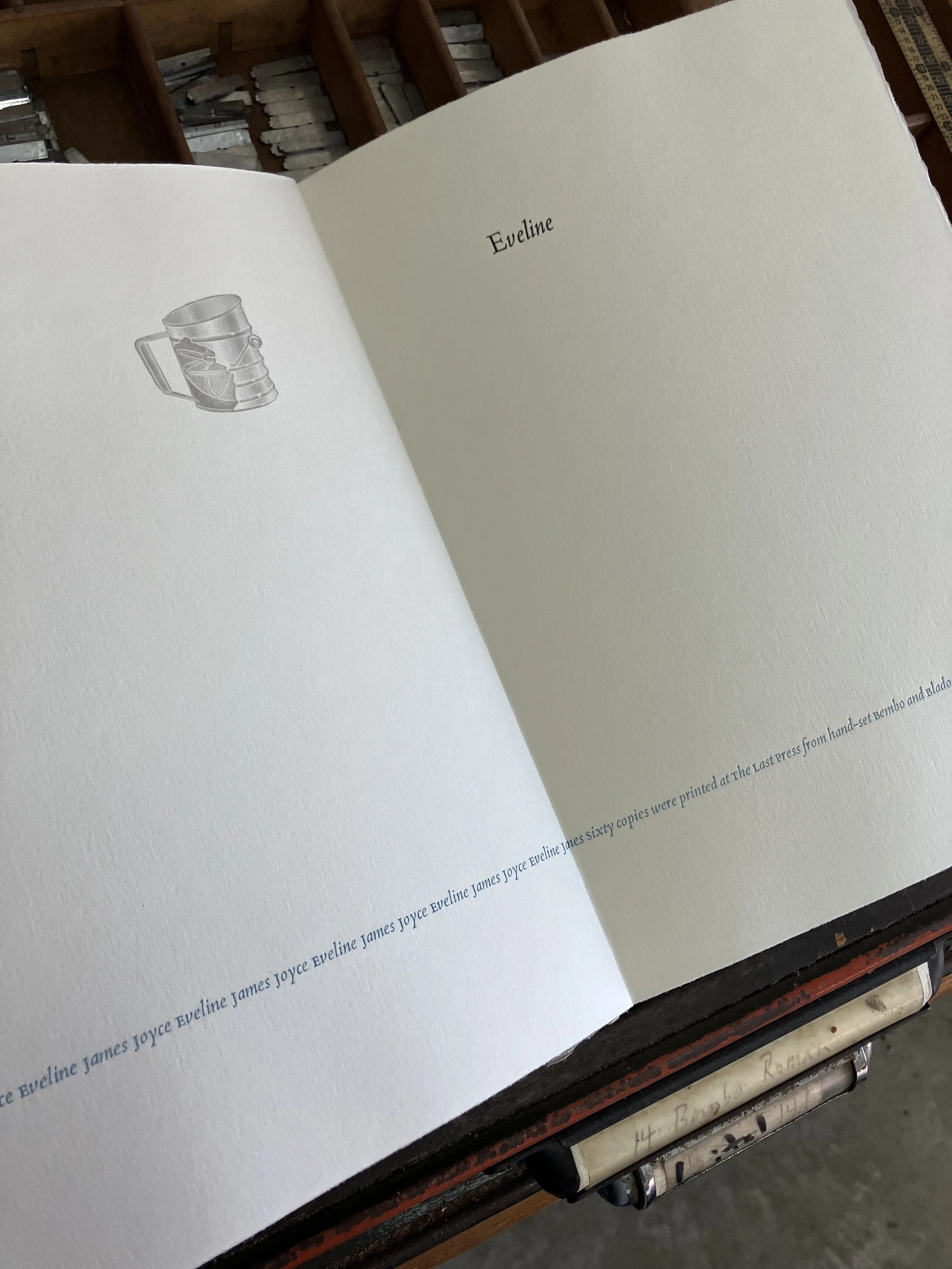 Image 3 of 8
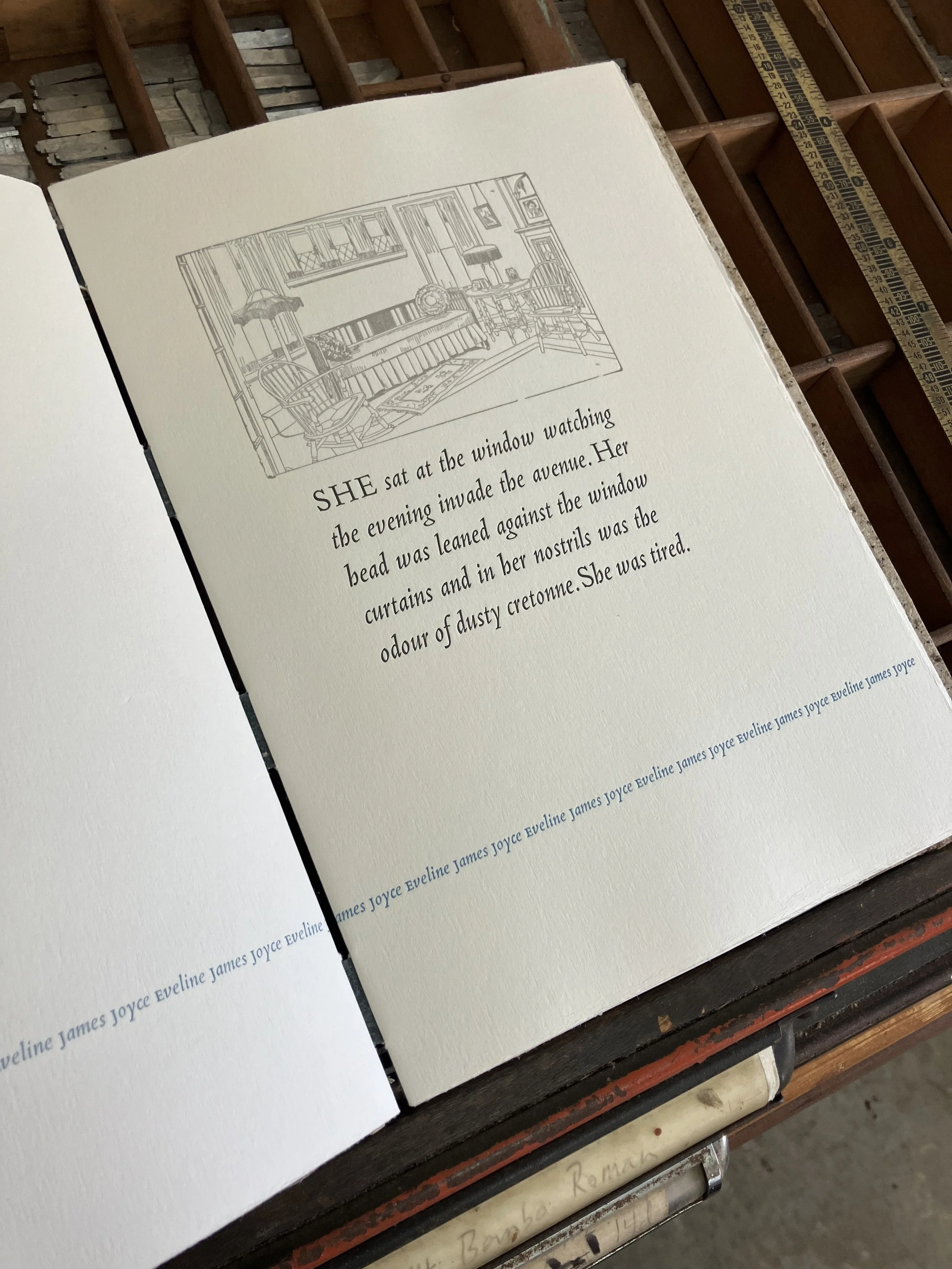 Image 4 of 8
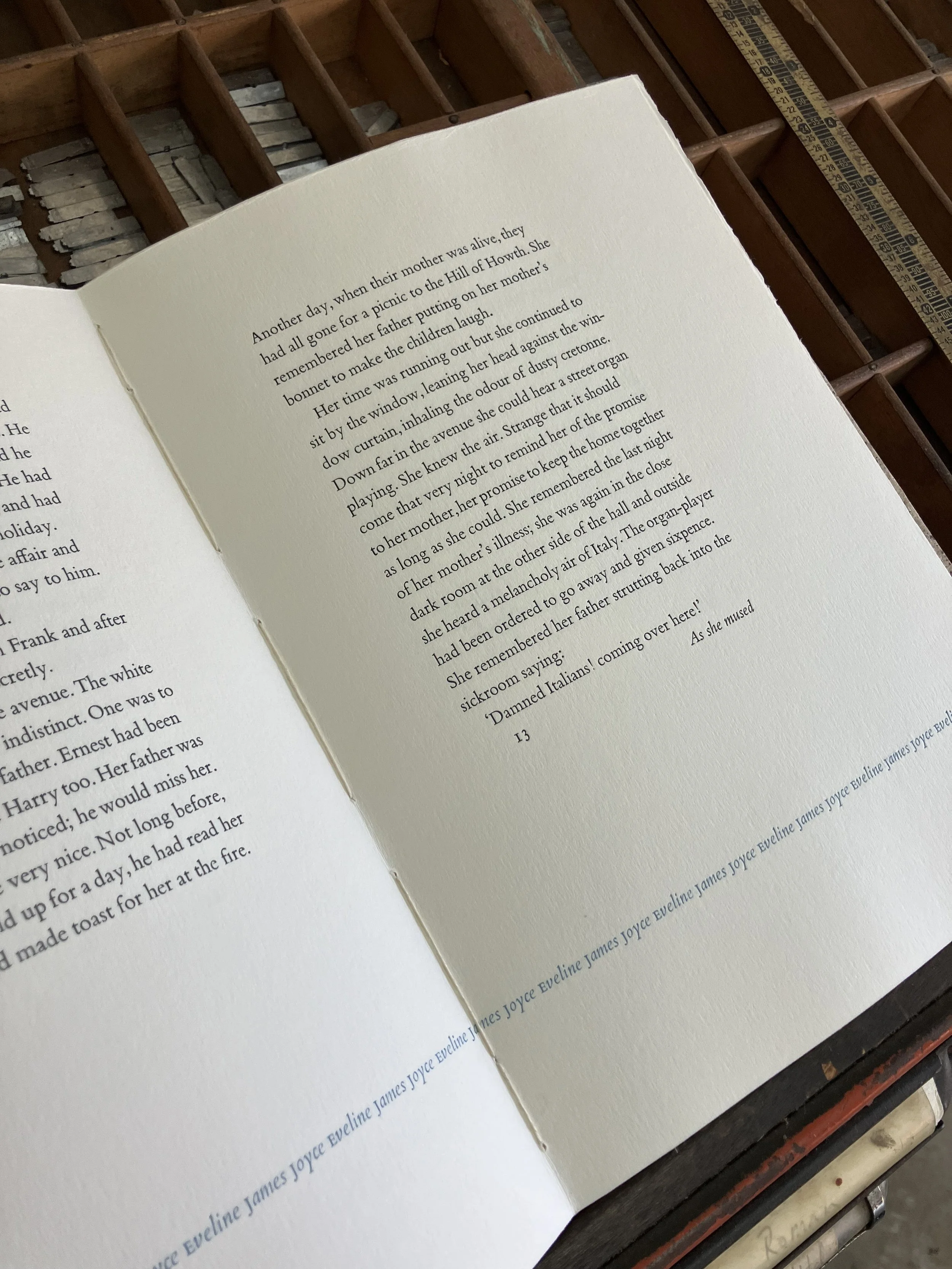 Image 5 of 8
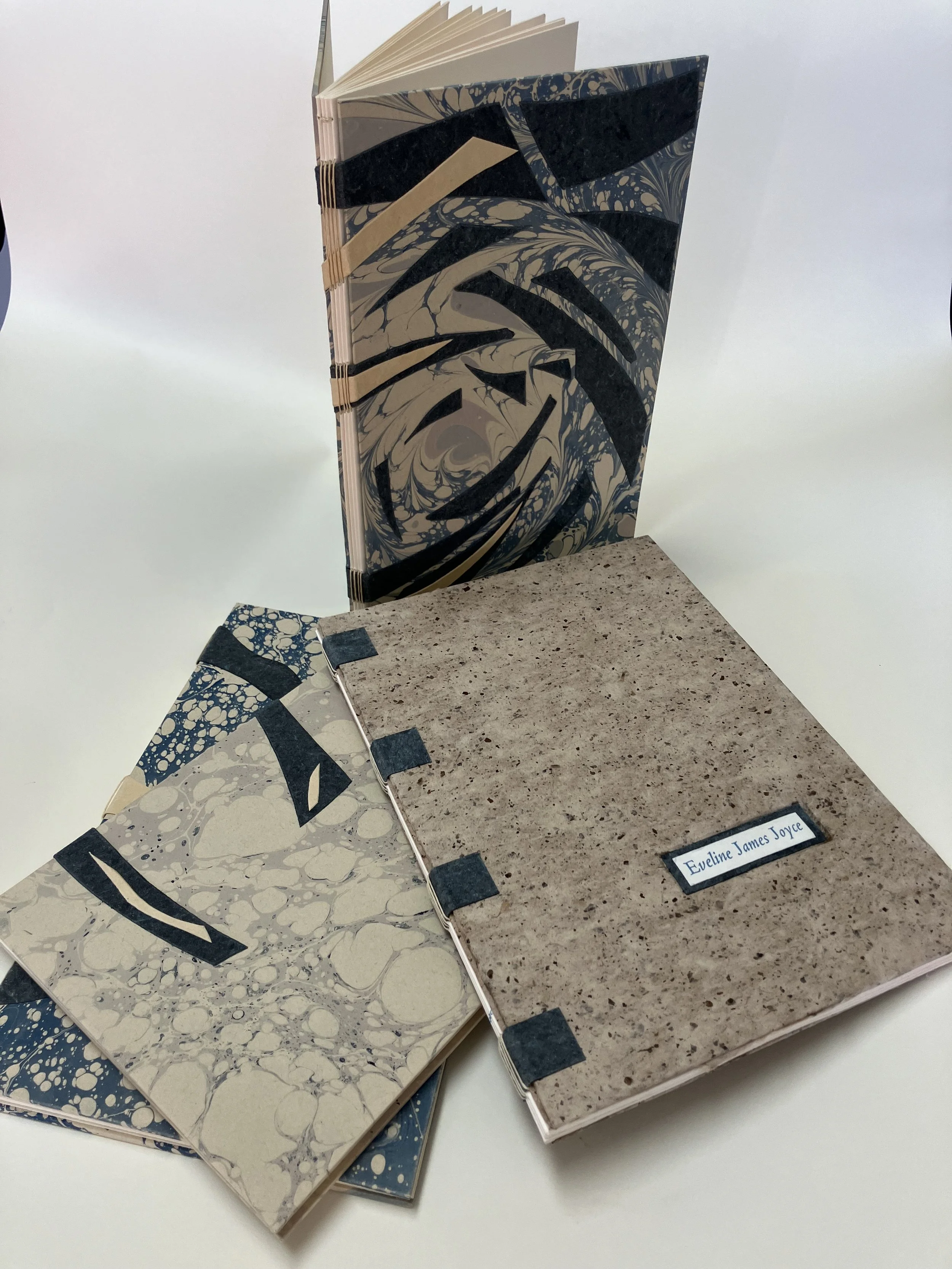 Image 6 of 8
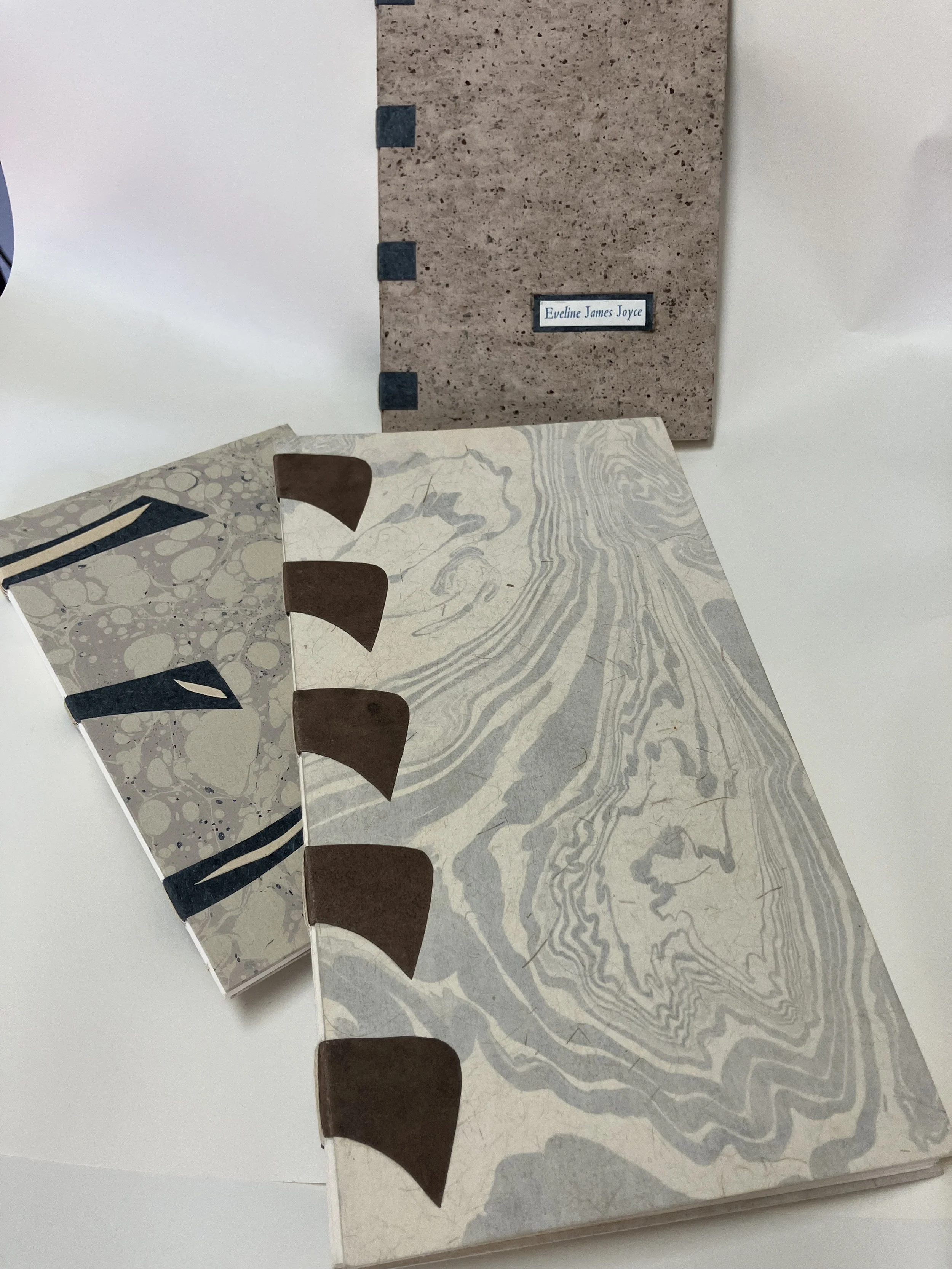 Image 7 of 8
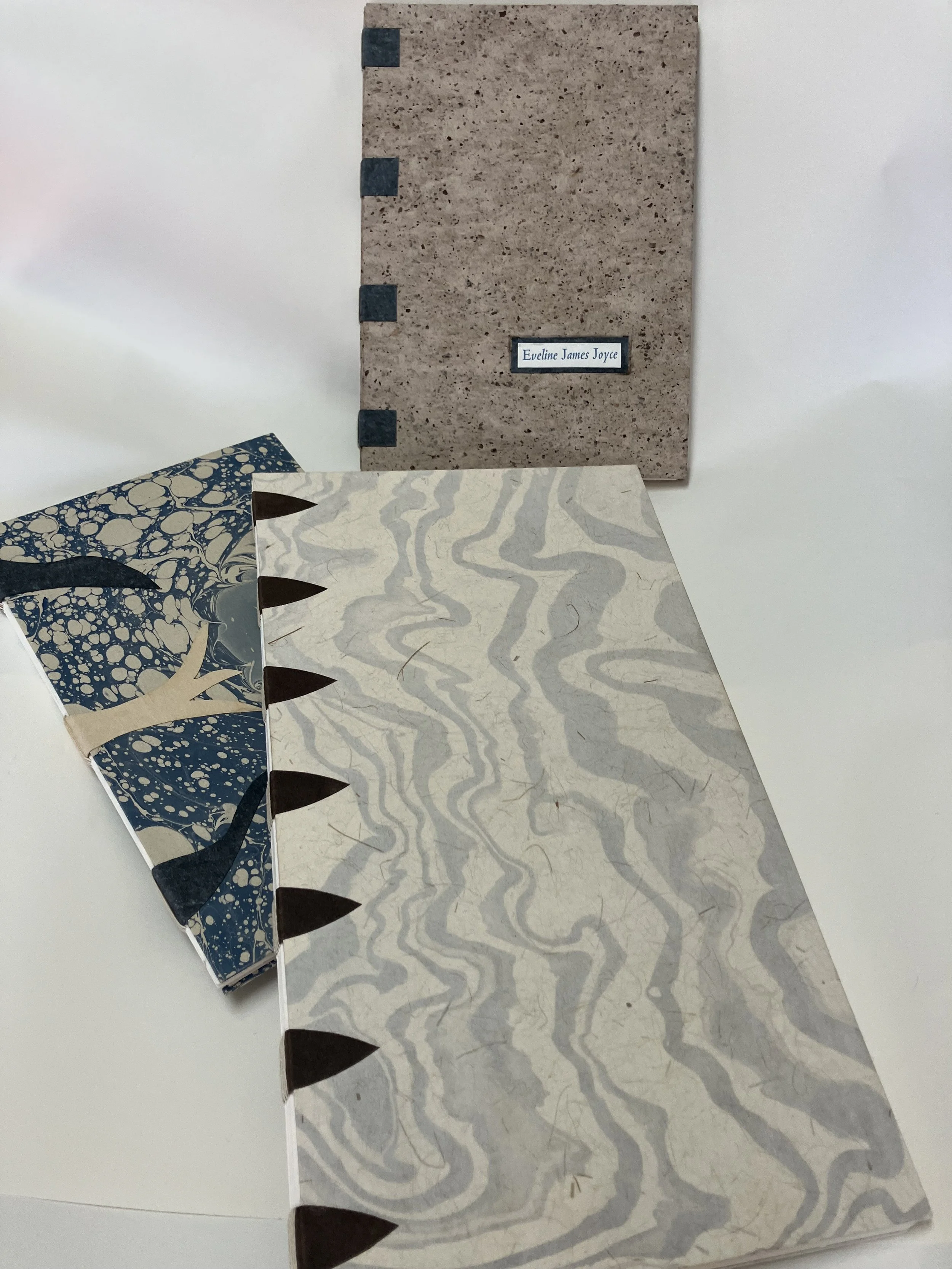 Image 8 of 8