In 1884, Hopkins was ensconced in a position teaching Classics at University College Dublin, a position he acquired with a committee vote that was highly contested and not unanimous. He was stuck in a city, separated from the natural world that connected him to his God, already depressed—a state exacerbated by the fact that he felt it to be a personal, spiritual failing—and now additionally burdened by his distaste for the quality of the work of the student body whose exams he had to mark. He felt unwelcome by the community, felt Dublin to be “a joyless place,” and was increasingly becoming disillusioned.
Out of this despair, his worry over the state of the world and his own spiritual connection to God, came the “Terrible Sonnets.” He was trying to make sense of his pessimism, his doubts about his religious vocation, and how God might or might not be incarnate in the morass of existence in which he found himself.
Hopkins’ language and style were always known to be experimental, but in these poems it is extreme. He breaks words across line breaks. His great poem we know as “Carrion Comfort” is a sonnet written in hexameter! I find some of the most compelling use of language in these Hopkins’ poems: ‘Selfyeast of spirit a dull dough sours,’ he says in “I wake and feel the fell of dark. . . .”
Hopkins requires a sustained read and reread; to this end The Last Press offers a hand-printed book that allows the longest lines to have their full expression as lines, and an open bifolio to allow the reader no visual distraction from the poems, set by hand in an ample 16 point Bembo typeface.
This is the second book in our autumn 2026 triptich, following Pro Patra Mori by Wilfred Owen. Fewer than 50 copies of Terrible Sonnets are printed on Johannot paper and covered in a flax wrapper from the University of Iowa Center for the Book. 10 copies are printed on Hahnemühle Biblio and quarter bound with Cave paper spines and handmade Japanese vegetable rush.
The frontispiece of this book is a wonderful sketch by the poet, artist, and printer Gary Young, whose terrific prose poems and woodcuts appear in our Sutton Hoo Press book No Harm Done, available on this site. The two books make a good pairing for the collector.
In 1884, Hopkins was ensconced in a position teaching Classics at University College Dublin, a position he acquired with a committee vote that was highly contested and not unanimous. He was stuck in a city, separated from the natural world that connected him to his God, already depressed—a state exacerbated by the fact that he felt it to be a personal, spiritual failing—and now additionally burdened by his distaste for the quality of the work of the student body whose exams he had to mark. He felt unwelcome by the community, felt Dublin to be “a joyless place,” and was increasingly becoming disillusioned.
Out of this despair, his worry over the state of the world and his own spiritual connection to God, came the “Terrible Sonnets.” He was trying to make sense of his pessimism, his doubts about his religious vocation, and how God might or might not be incarnate in the morass of existence in which he found himself.
Hopkins’ language and style were always known to be experimental, but in these poems it is extreme. He breaks words across line breaks. His great poem we know as “Carrion Comfort” is a sonnet written in hexameter! I find some of the most compelling use of language in these Hopkins’ poems: ‘Selfyeast of spirit a dull dough sours,’ he says in “I wake and feel the fell of dark. . . .”
Hopkins requires a sustained read and reread; to this end The Last Press offers a hand-printed book that allows the longest lines to have their full expression as lines, and an open bifolio to allow the reader no visual distraction from the poems, set by hand in an ample 16 point Bembo typeface.
This is the second book in our autumn 2026 triptich, following Pro Patra Mori by Wilfred Owen. Fewer than 50 copies of Terrible Sonnets are printed on Johannot paper and covered in a flax wrapper from the University of Iowa Center for the Book. 10 copies are printed on Hahnemühle Biblio and quarter bound with Cave paper spines and handmade Japanese vegetable rush.
The frontispiece of this book is a wonderful sketch by the poet, artist, and printer Gary Young, whose terrific prose poems and woodcuts appear in our Sutton Hoo Press book No Harm Done, available on this site. The two books make a good pairing for the collector.

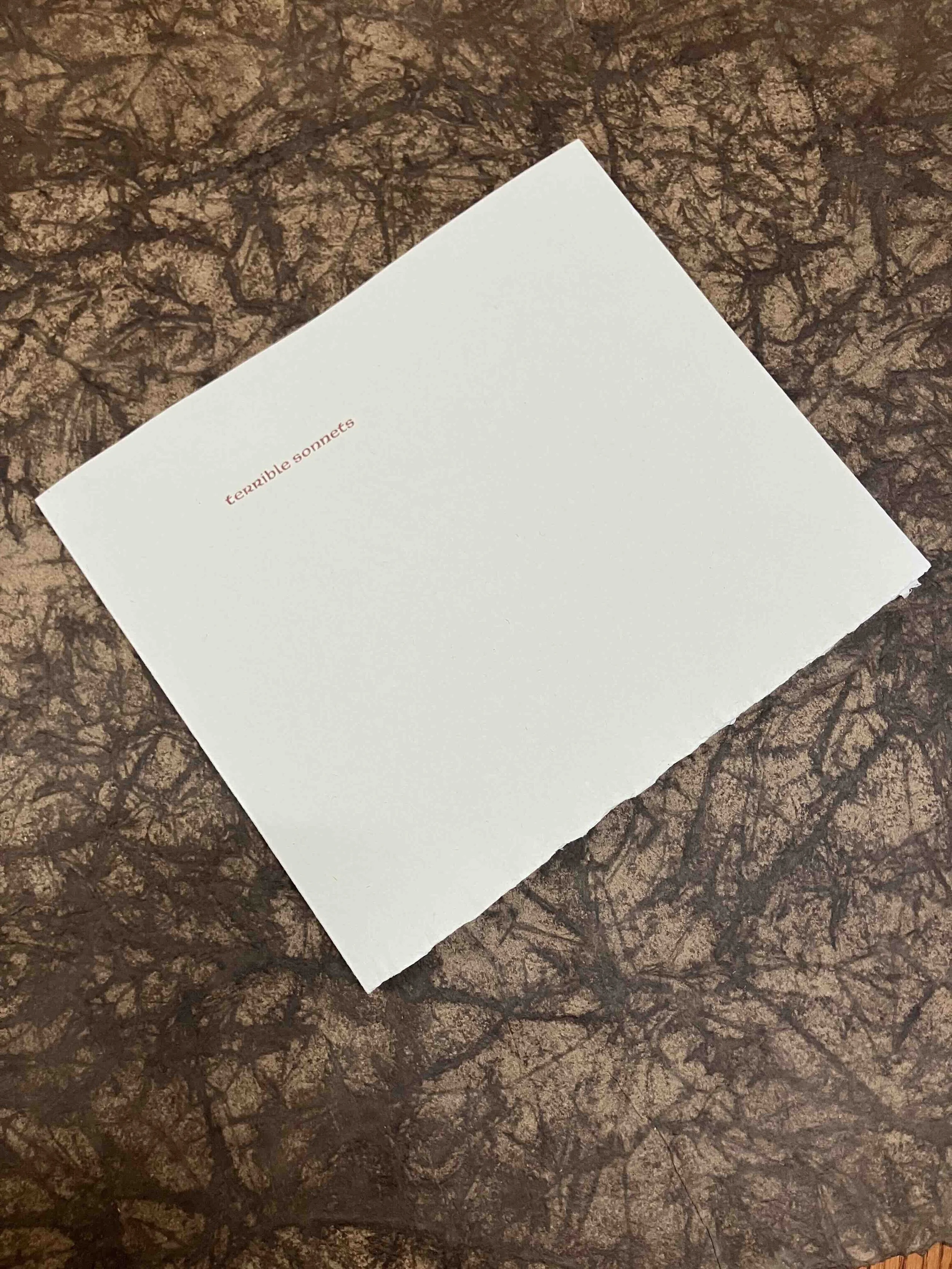 Image 1 of 7
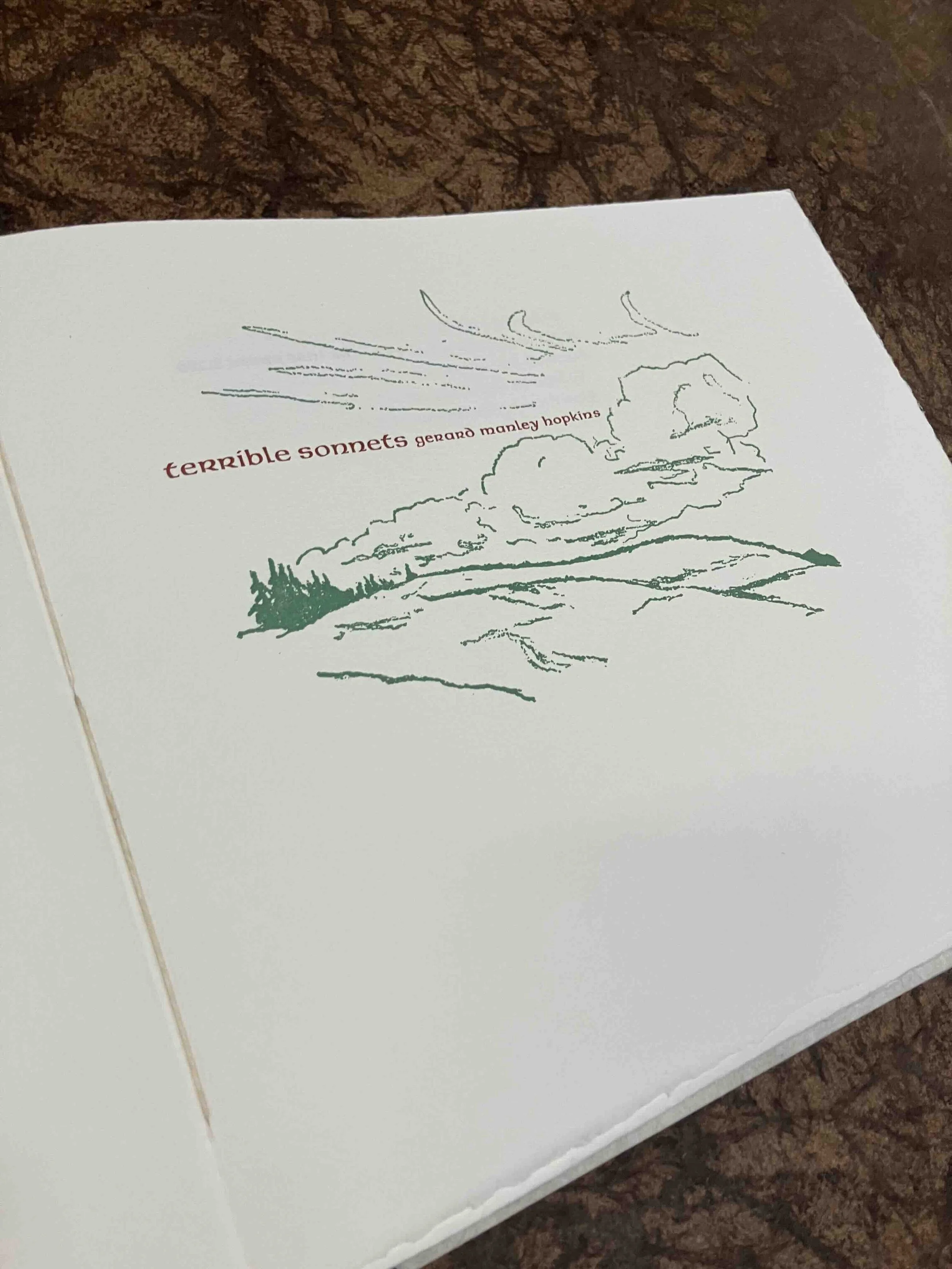 Image 2 of 7
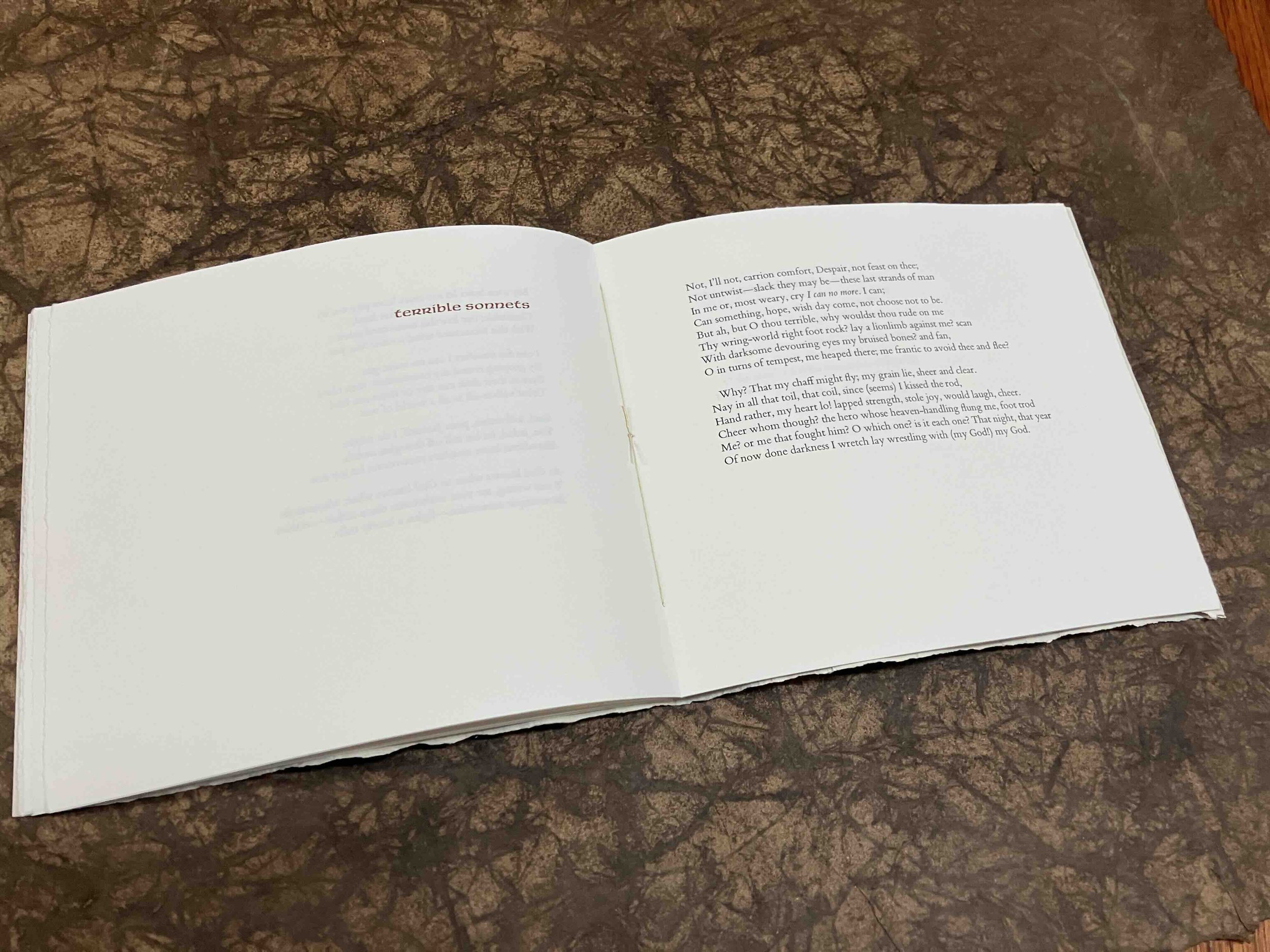 Image 3 of 7
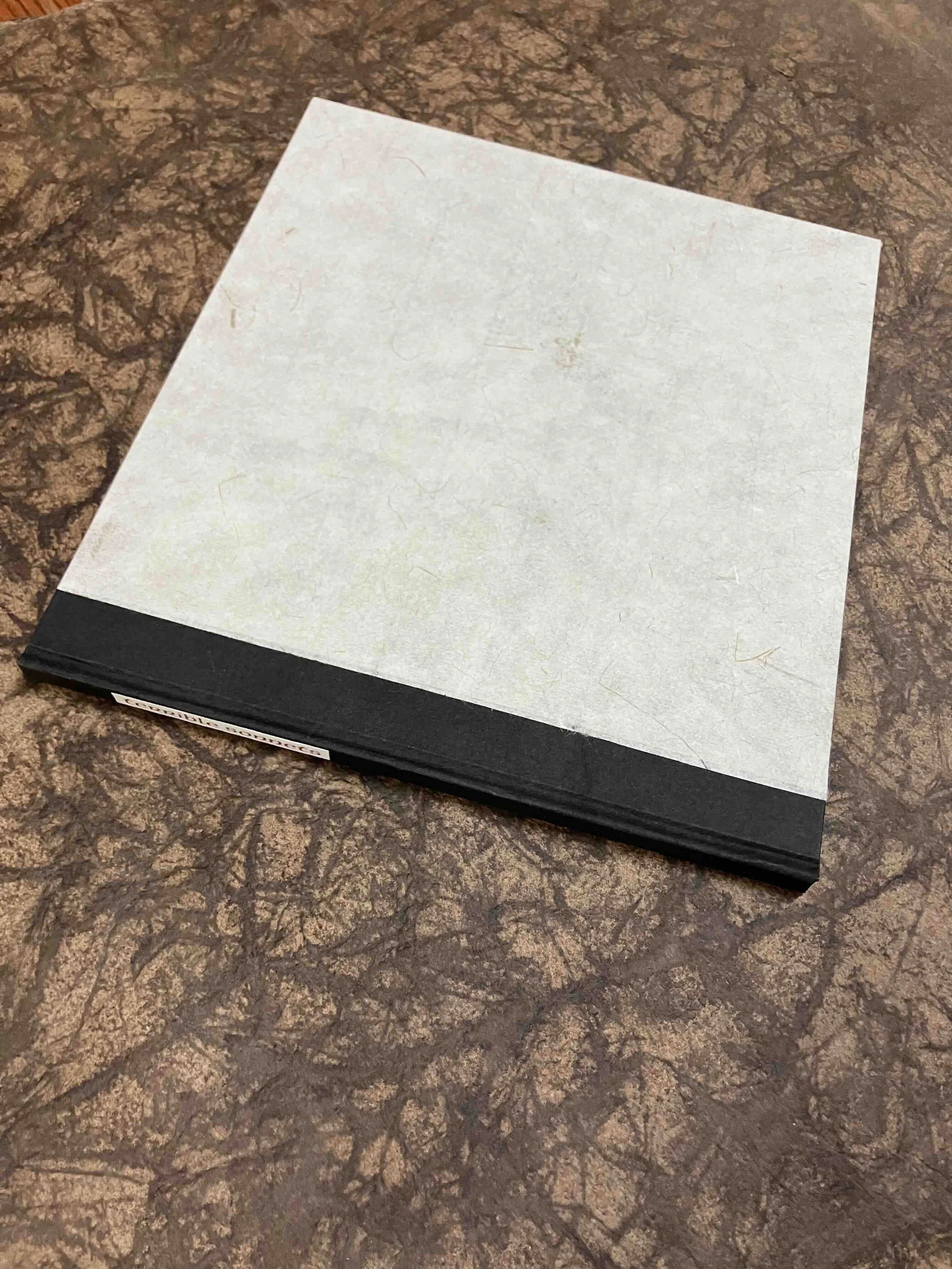 Image 4 of 7
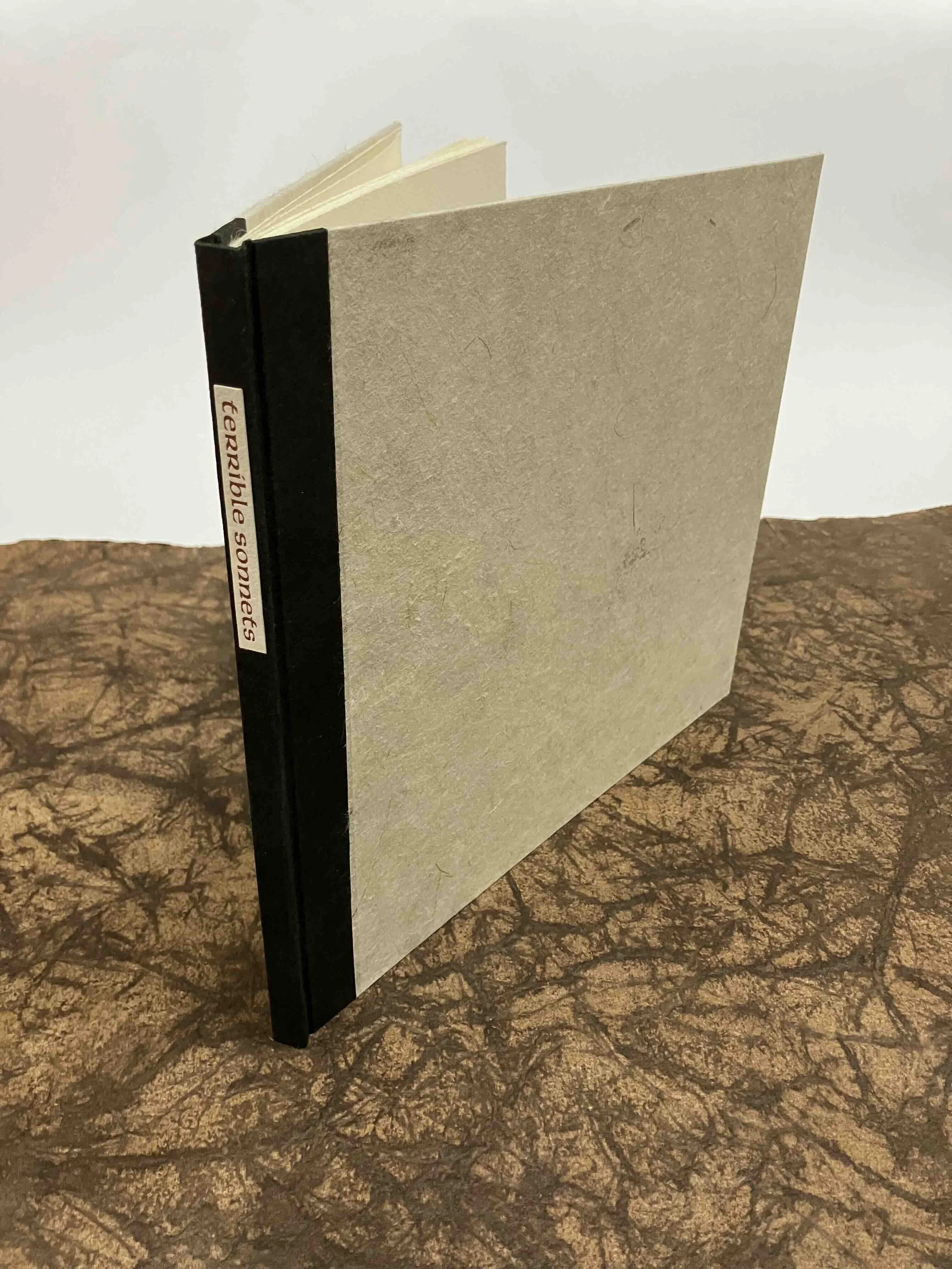 Image 5 of 7
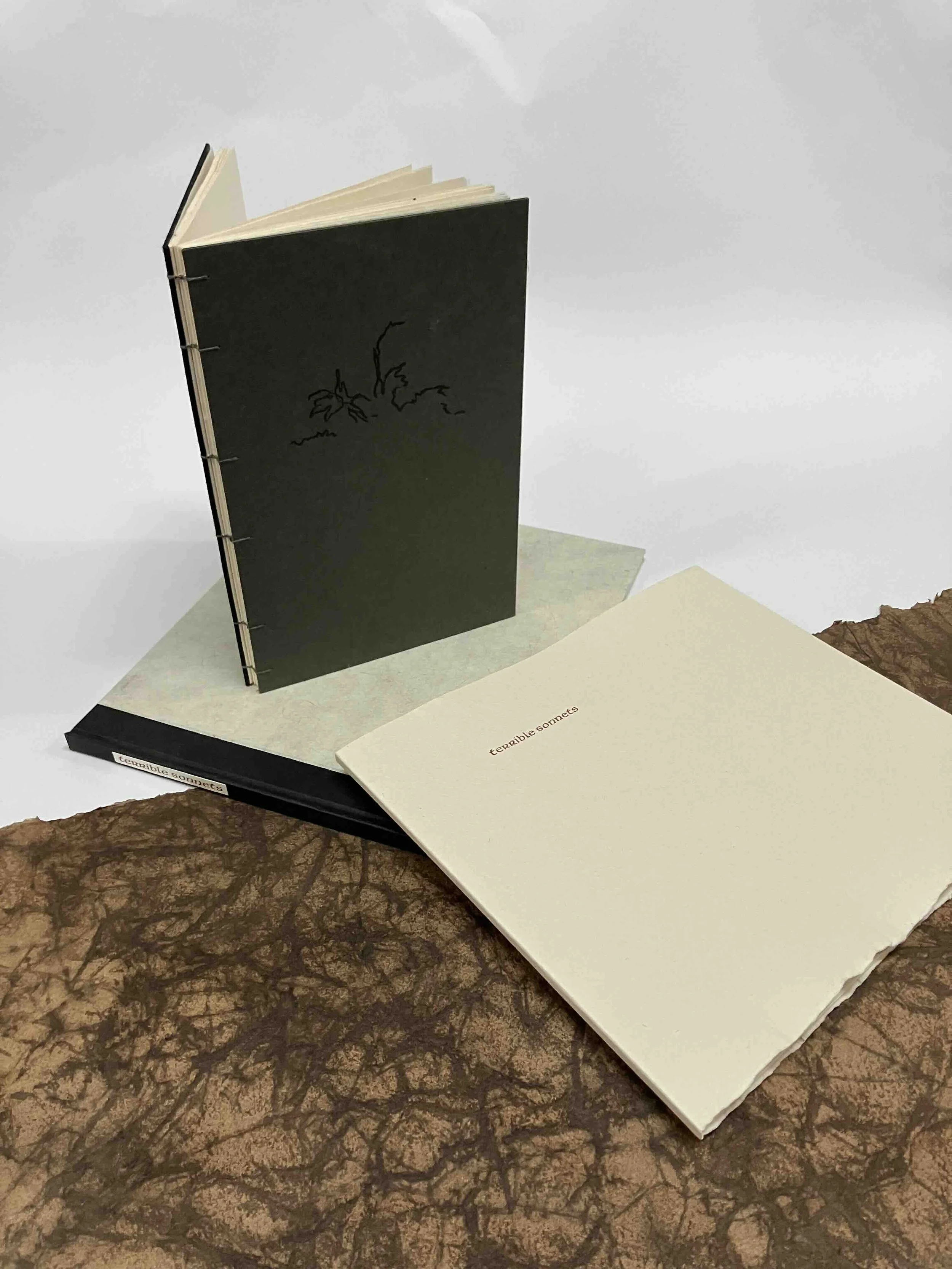 Image 6 of 7
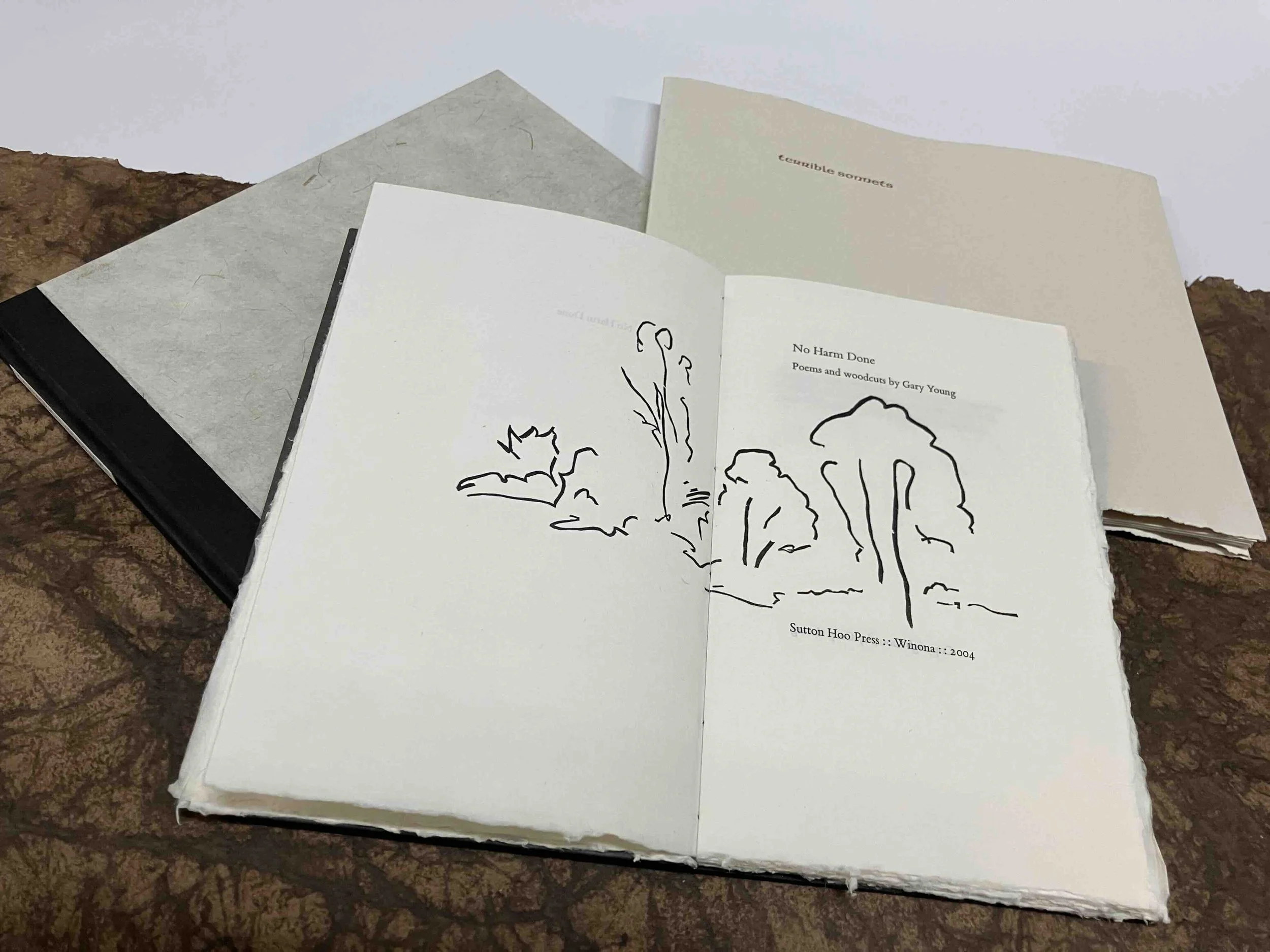 Image 7 of 7